
Green, but no longer wild
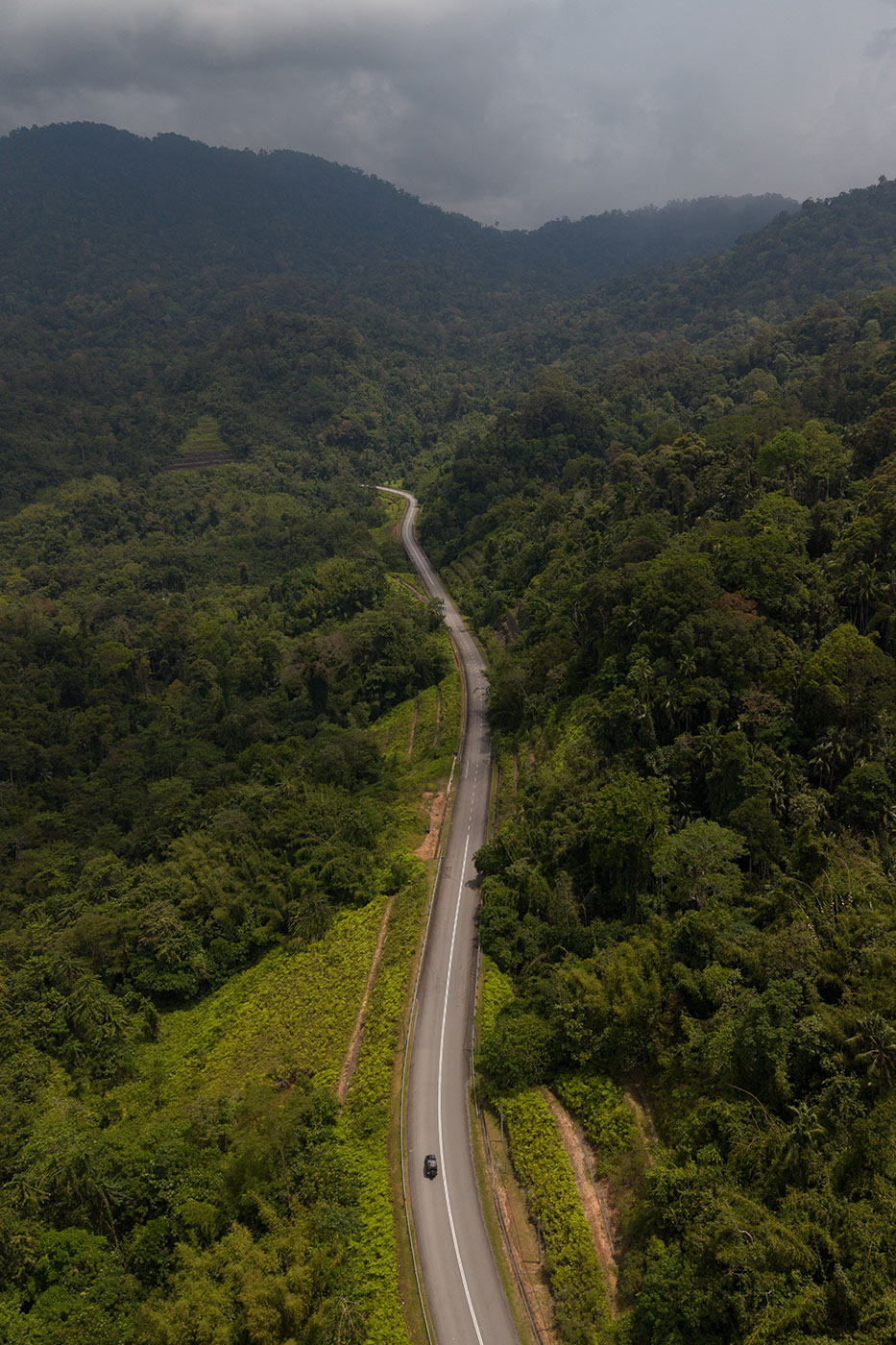
We left the cool air of Cameron Highlands and drove back down towards Kuala Lumpur. The temperature climbed quickly, once we reached the flatland. It was far too hot to camp, so we decided to escape into another jungle-covered highland and set Fraser’s Hill as our next stop.
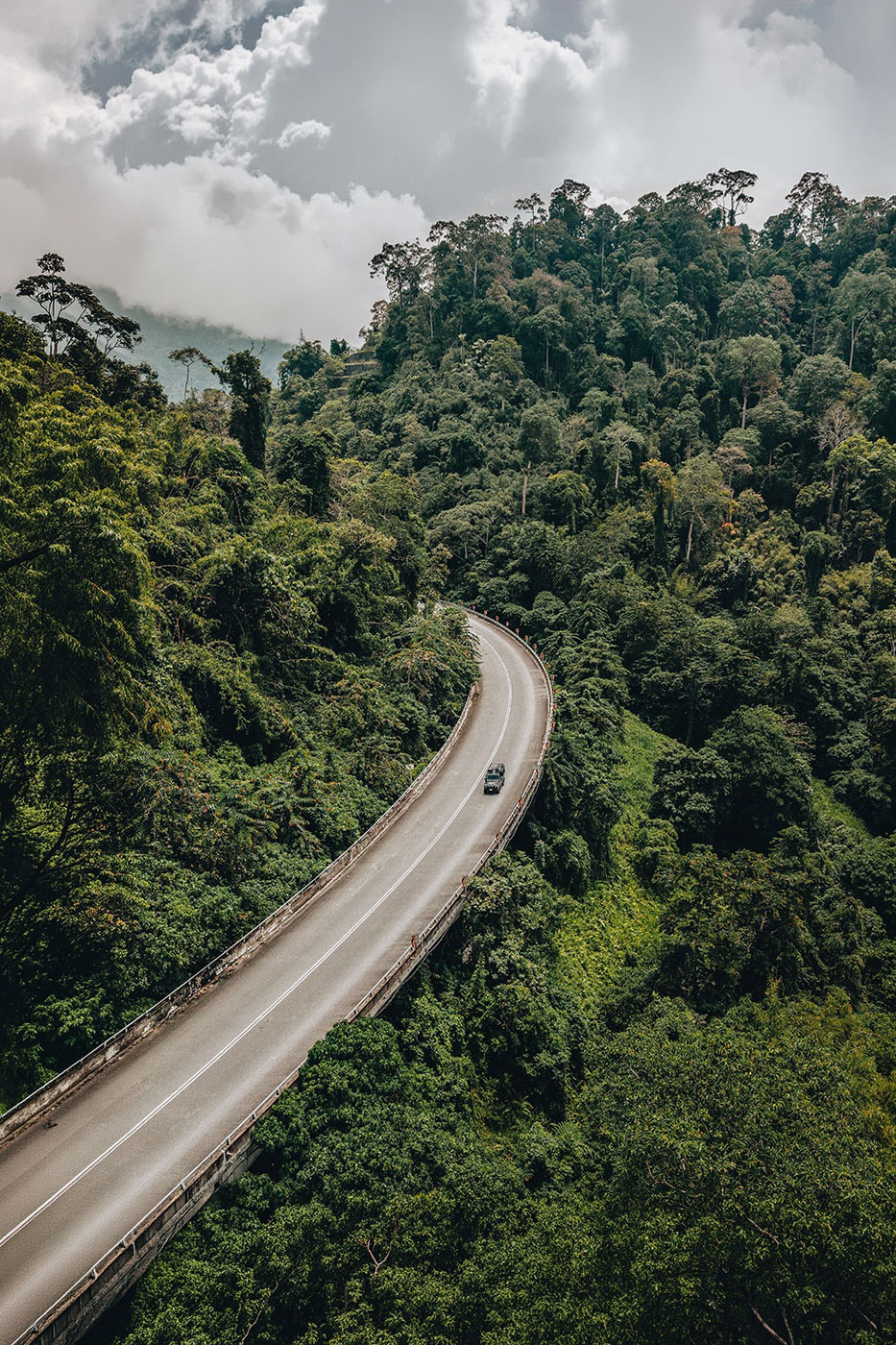
For a while, the road looked promising. Dense forest surrounded us, and signs warning us to “Be Aware of Elephants” made us hope that this might finally be the place where we would see these beautiful animals in the wild.

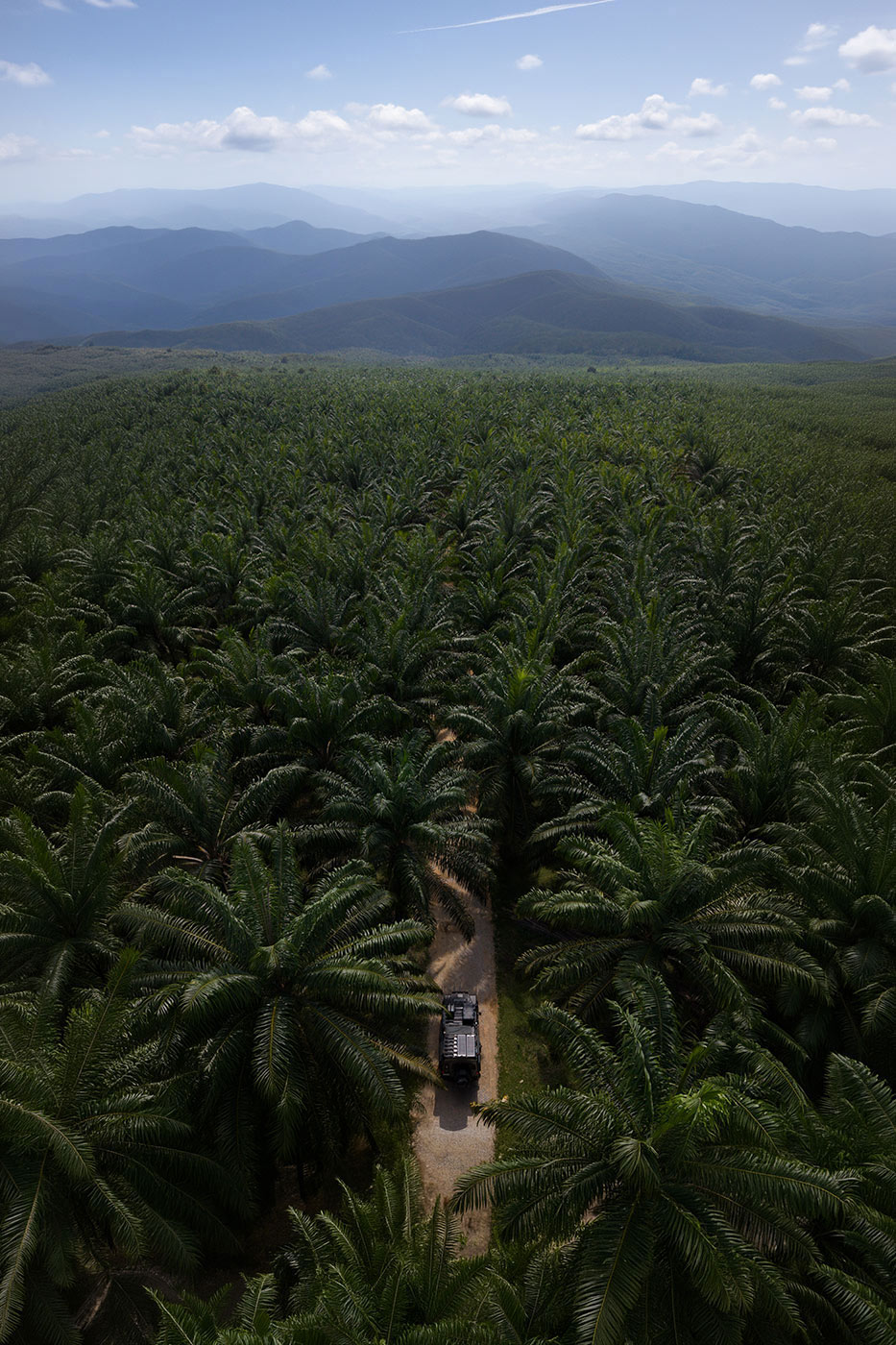
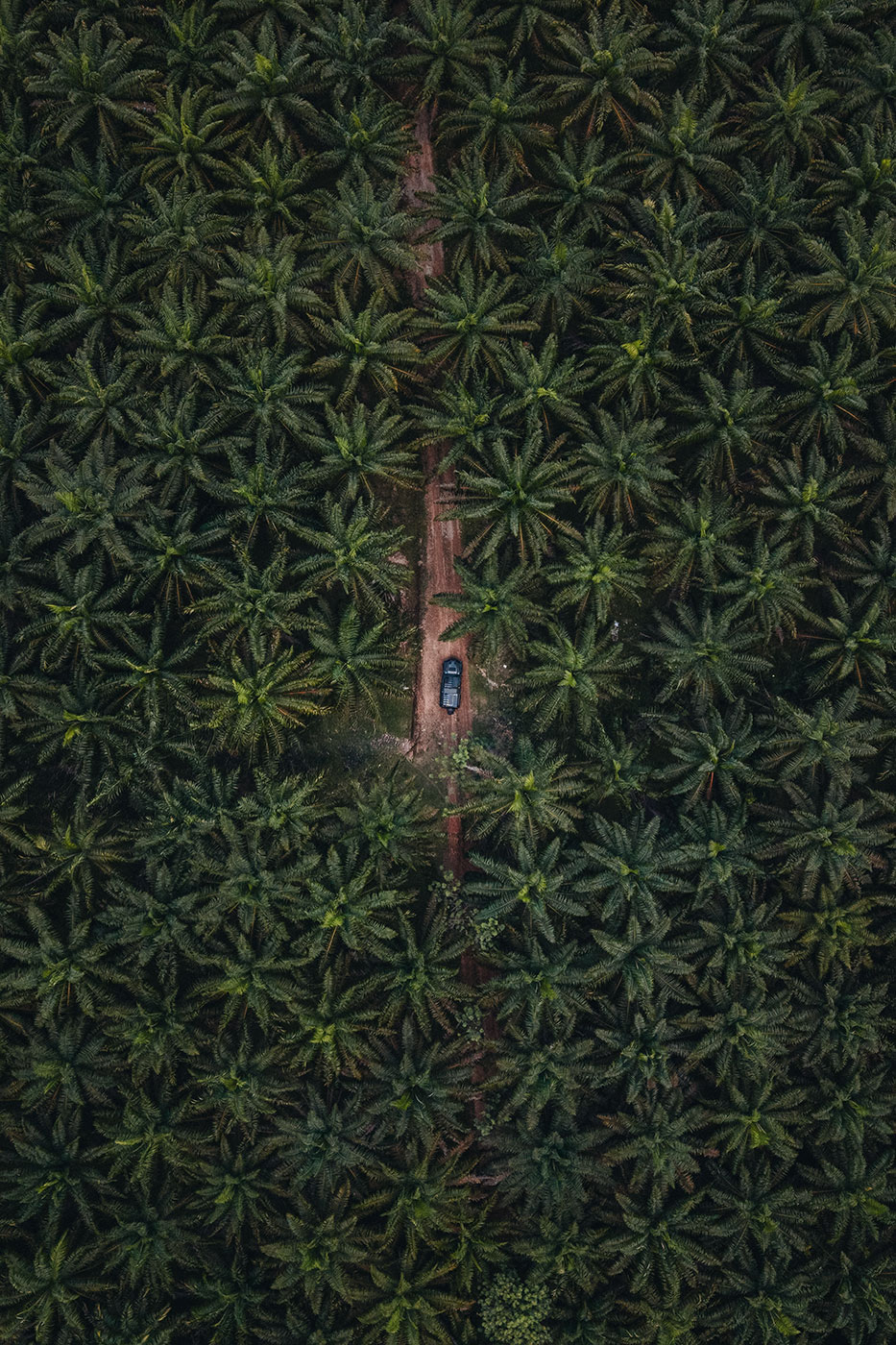
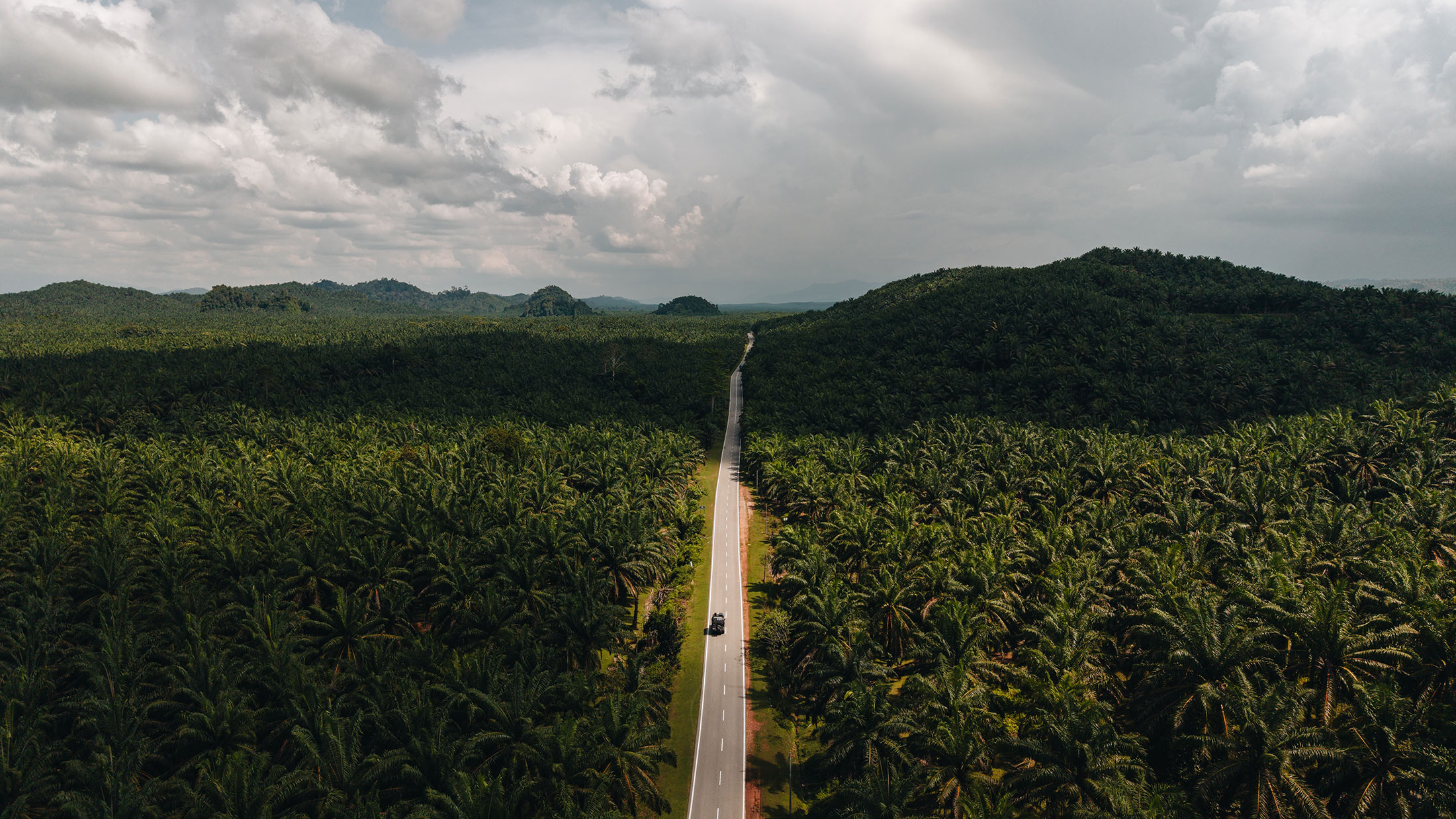
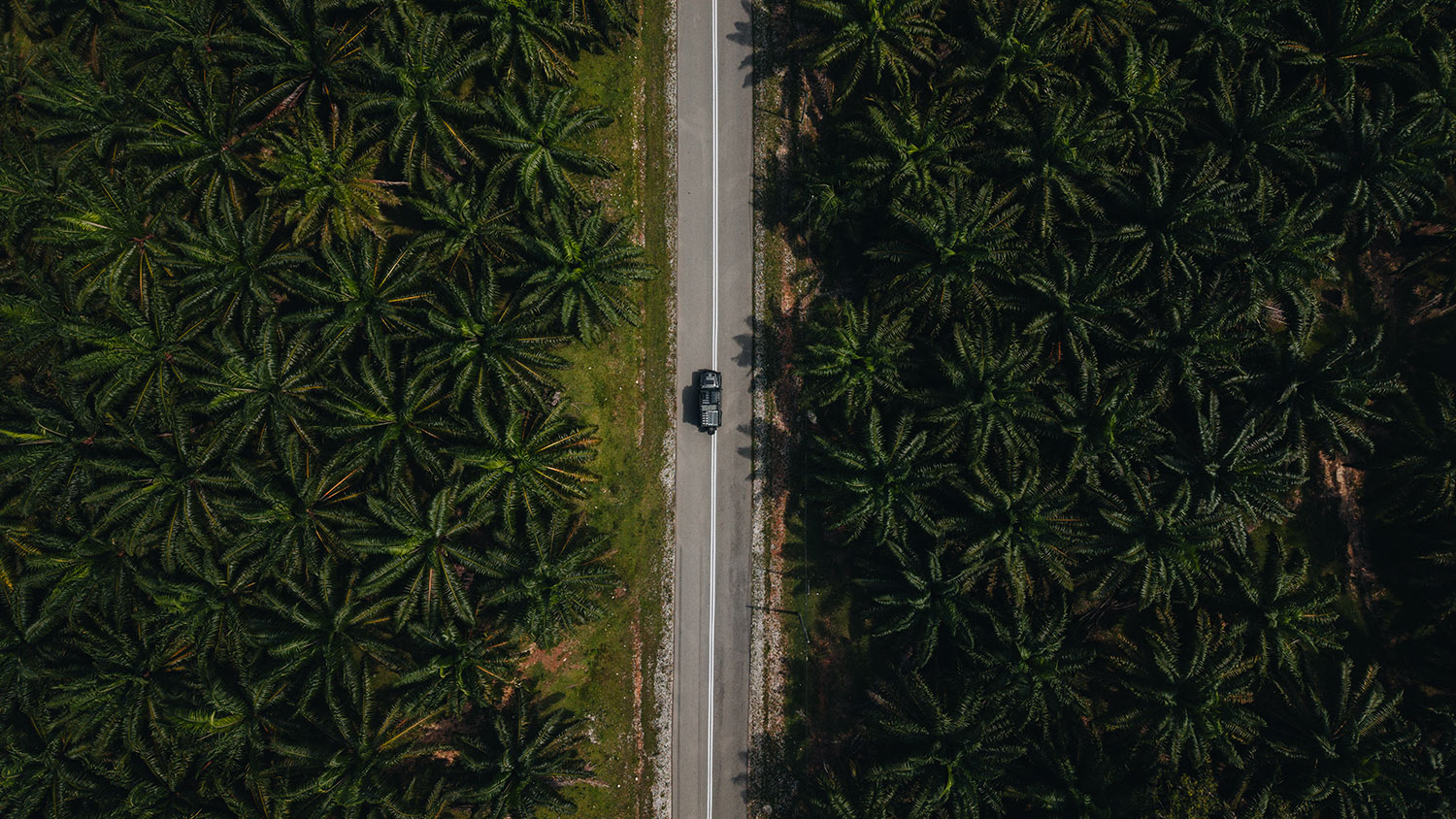
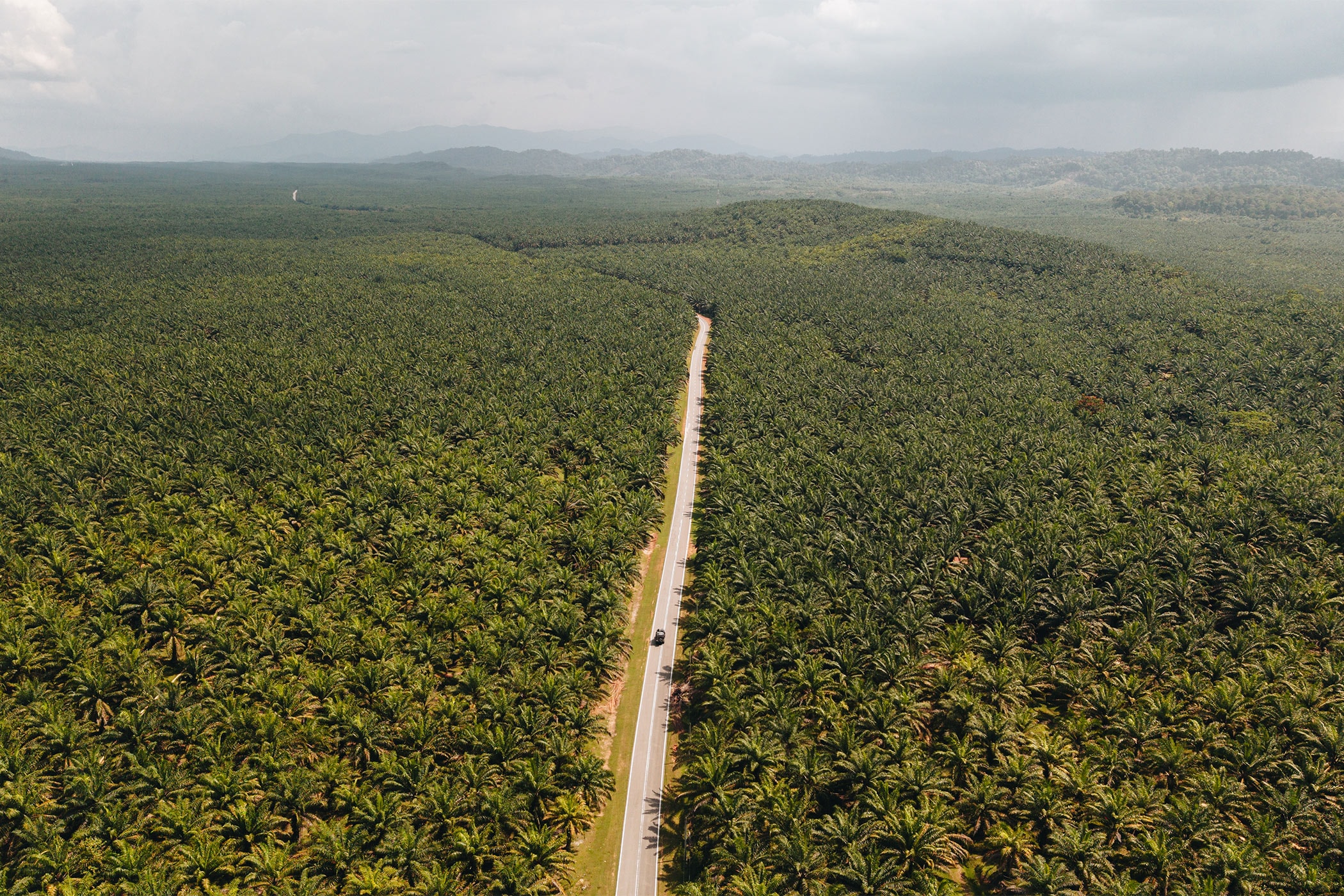
But that didn’t last long the jungle disappeared and turned into endless rows of oil palms. At first glance, the plantations look somehow beautiful, impressive to see how big it was while sending up the drone. Everything is green until the horizon and still felt tropical.
This green landscape is very different from the rainforest it replaced. Oil palm plantations now cover around 19% of Peninsular Malaysia, roughly 2.5 million hectares, an area almost two-thirds the size of Switzerland or about 3.5 million football fields.
Palm oil plantations.
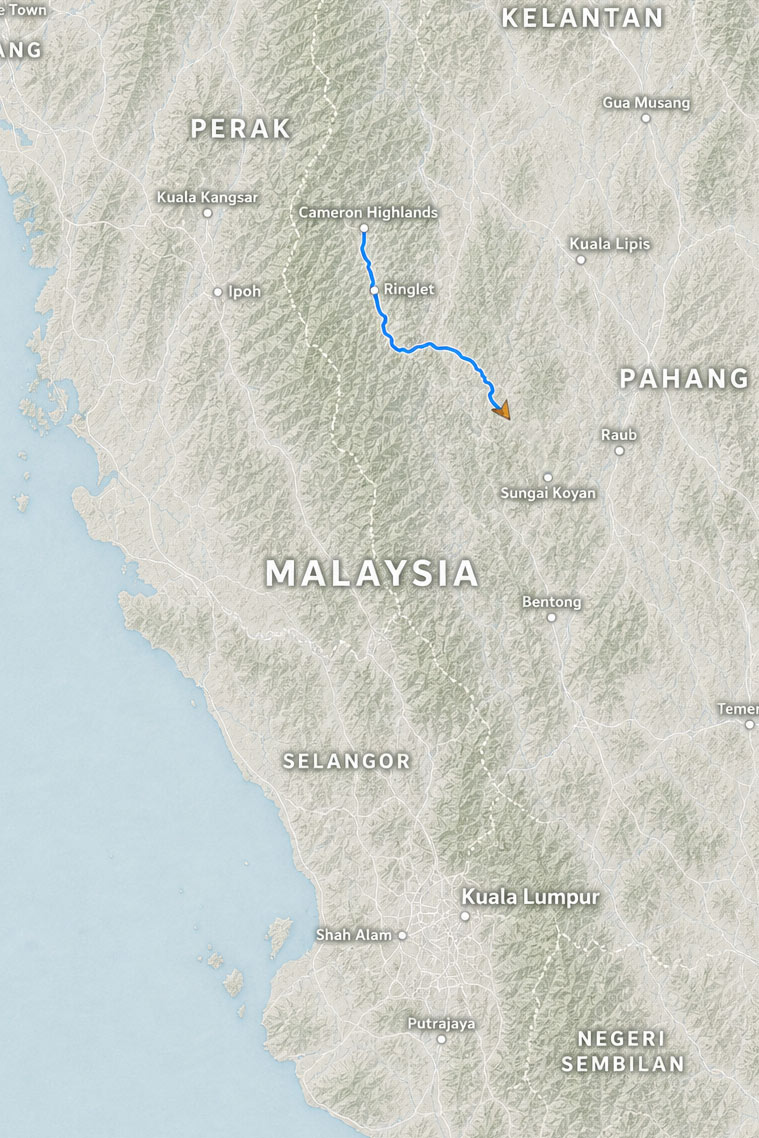
Our route from Cameron Highlands towards Kuala Lumpur.
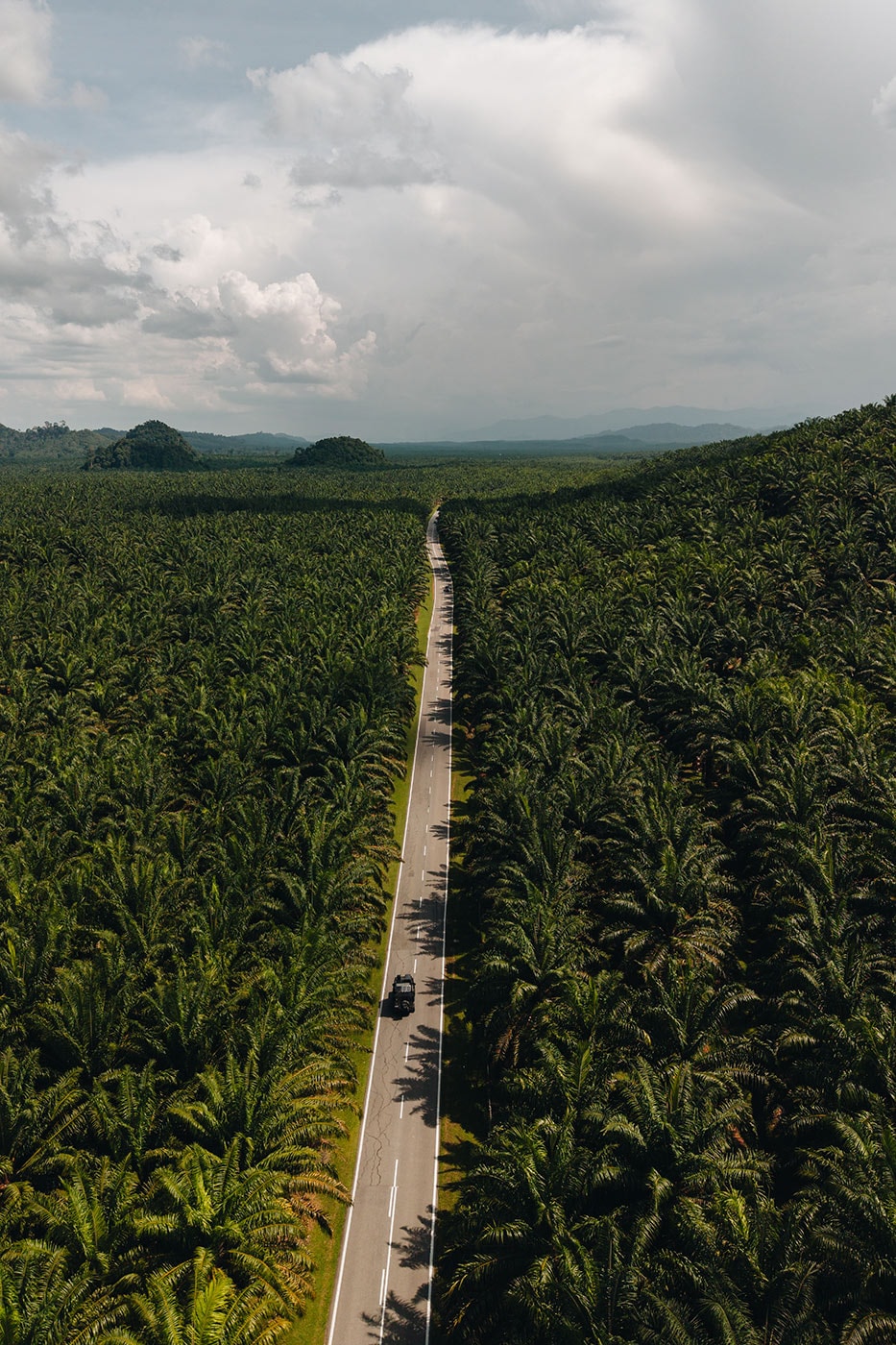
End then endless Palm Oil Trees.
According to figures from the Malaysian Palm Oil Board, oil palms covered around 2.54 million hectares of Peninsular Malaysia in 2025. That is more than 19 percent of the peninsula's total land area.
It is roughly two thirds the size of Switzerland, or the equivalent of more than 3.5 million football fields.
Seeing the plantations from the air made those numbers feel a little more real. The rows did not end at the next hill. They continued across one ridge after another.

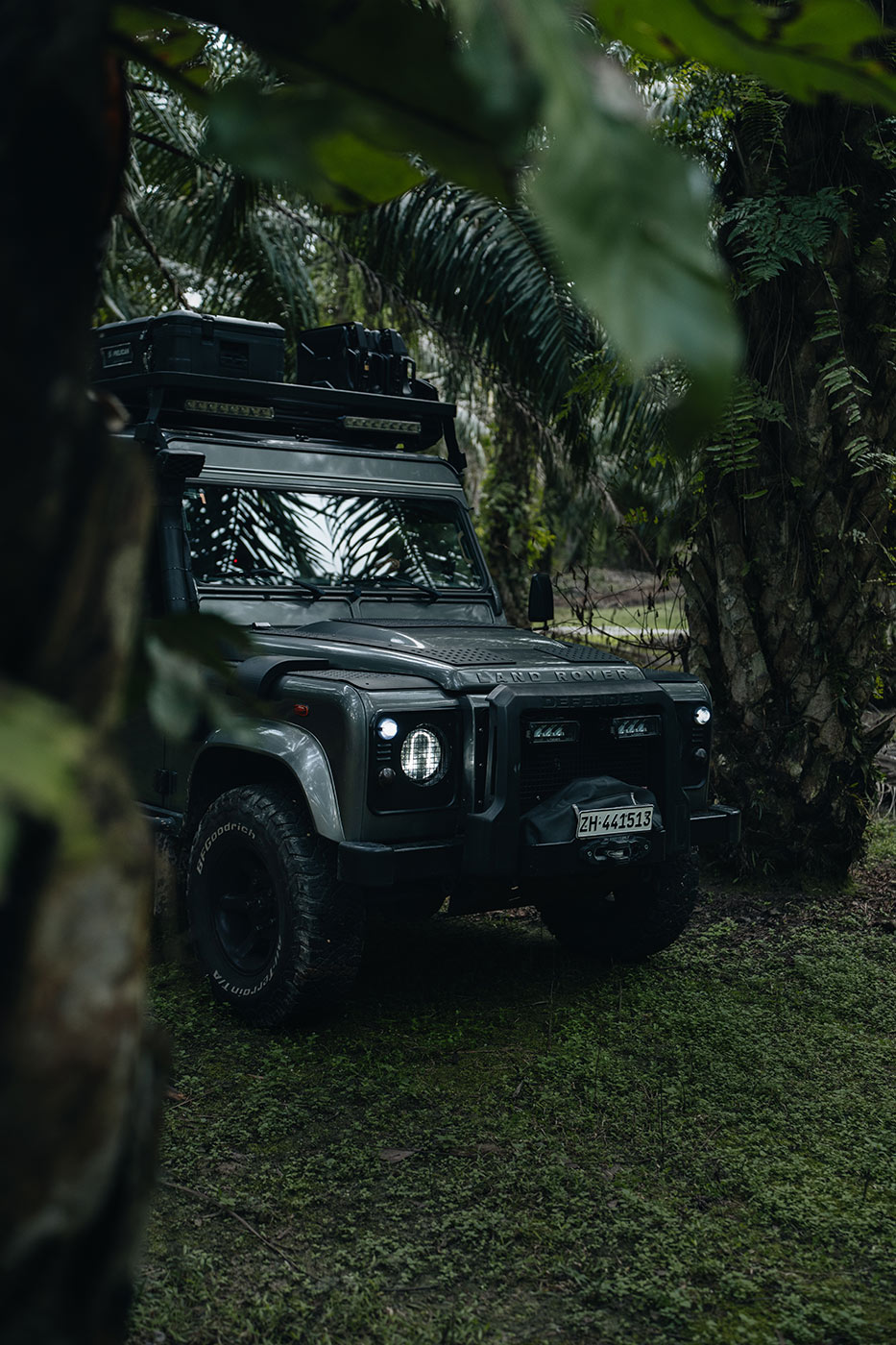
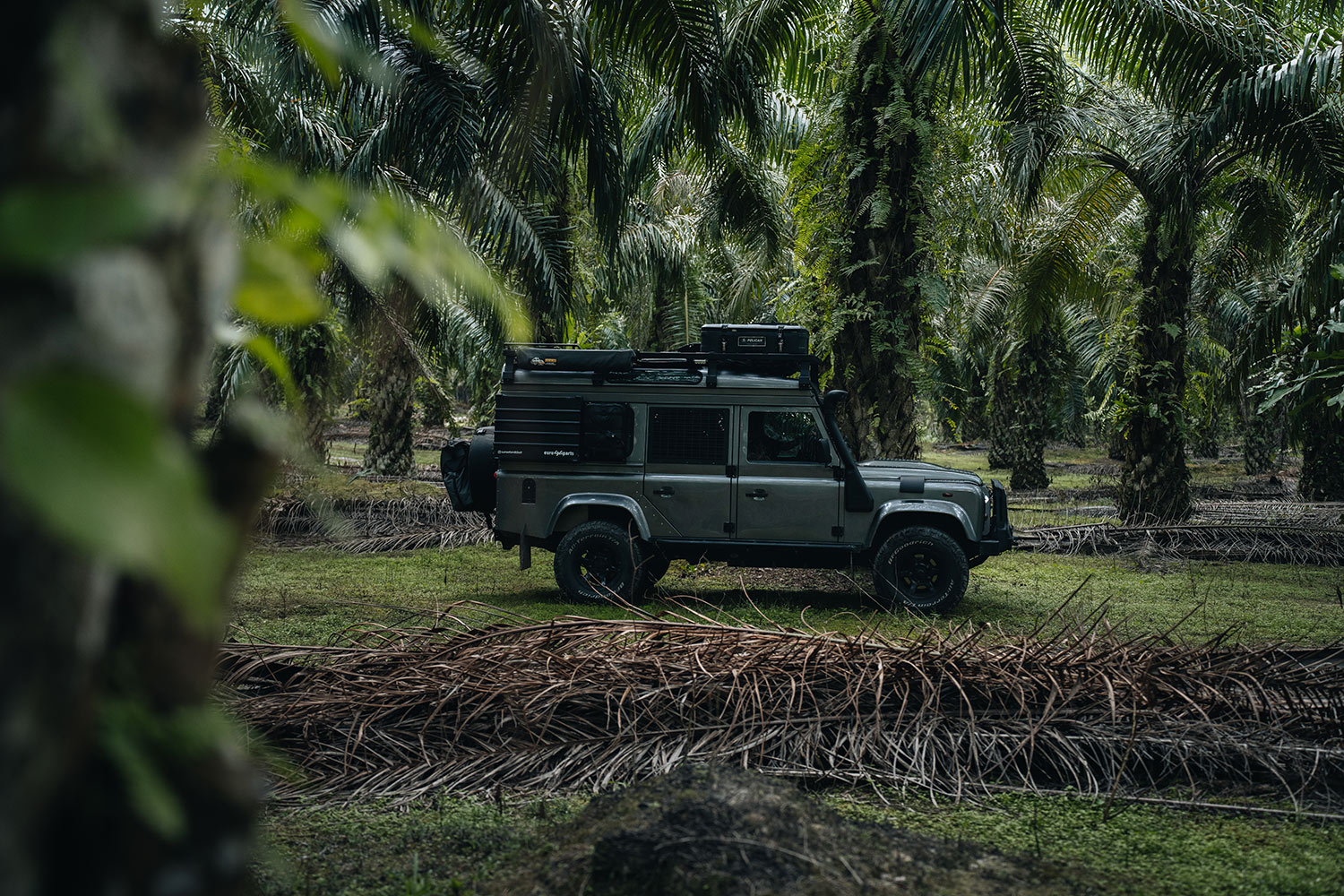
Overlanding often takes us through places we would otherwise never see. Travelling through Malaysia in our Land Rover Defender means we can leave the main highways, follow smaller roads and watch the landscape change slowly through the windscreen.
Sometimes those roads lead to incredible campsites or unexpected wildlife encounters. At other times, they reveal a less comfortable side of a country.
Looking for animals between the palms
The rainforests of Peninsular Malaysia are home to an extraordinary variety of wildlife. Asian elephants share these forests with Malayan tigers, tapirs, sun bears, gibbons, hornbills and countless smaller animals that are much easier to overlook.
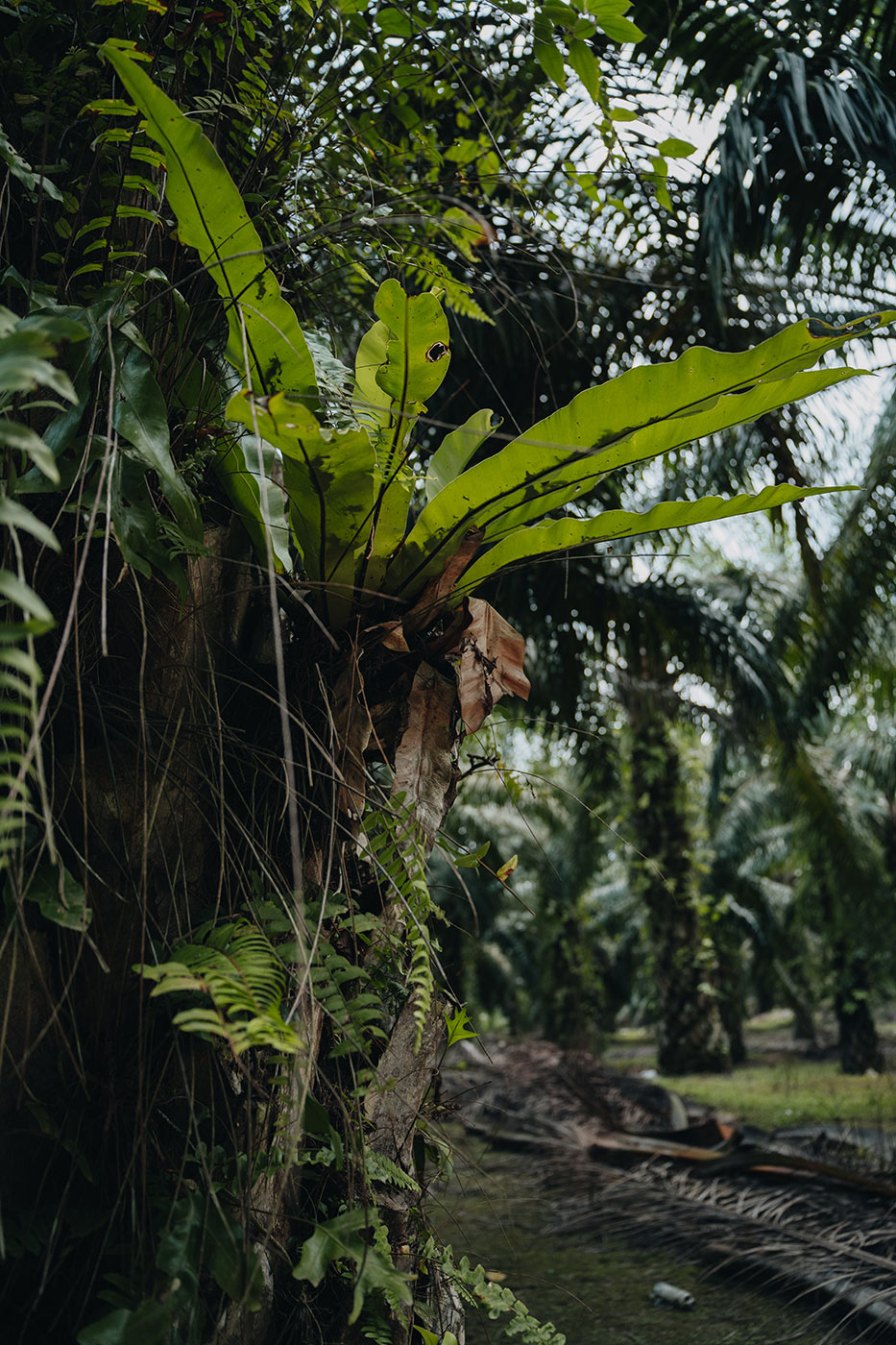
Most of them depend on connected areas of natural forest for food, shelter and movement. When those forests are cleared or broken into isolated patches, the animals lose more than trees. Their routes disappear, encounters with people become more likely and survival becomes harder.
Of course, palm oil is not a simple subject. It provides an income for many families and is found in an enormous number of everyday products around the world. The problem becomes visible when plantations replace natural forest or cut the remaining jungle into smaller and smaller fragments.
From inside the Defender, it was difficult to ignore what that transformation looked like on the ground.