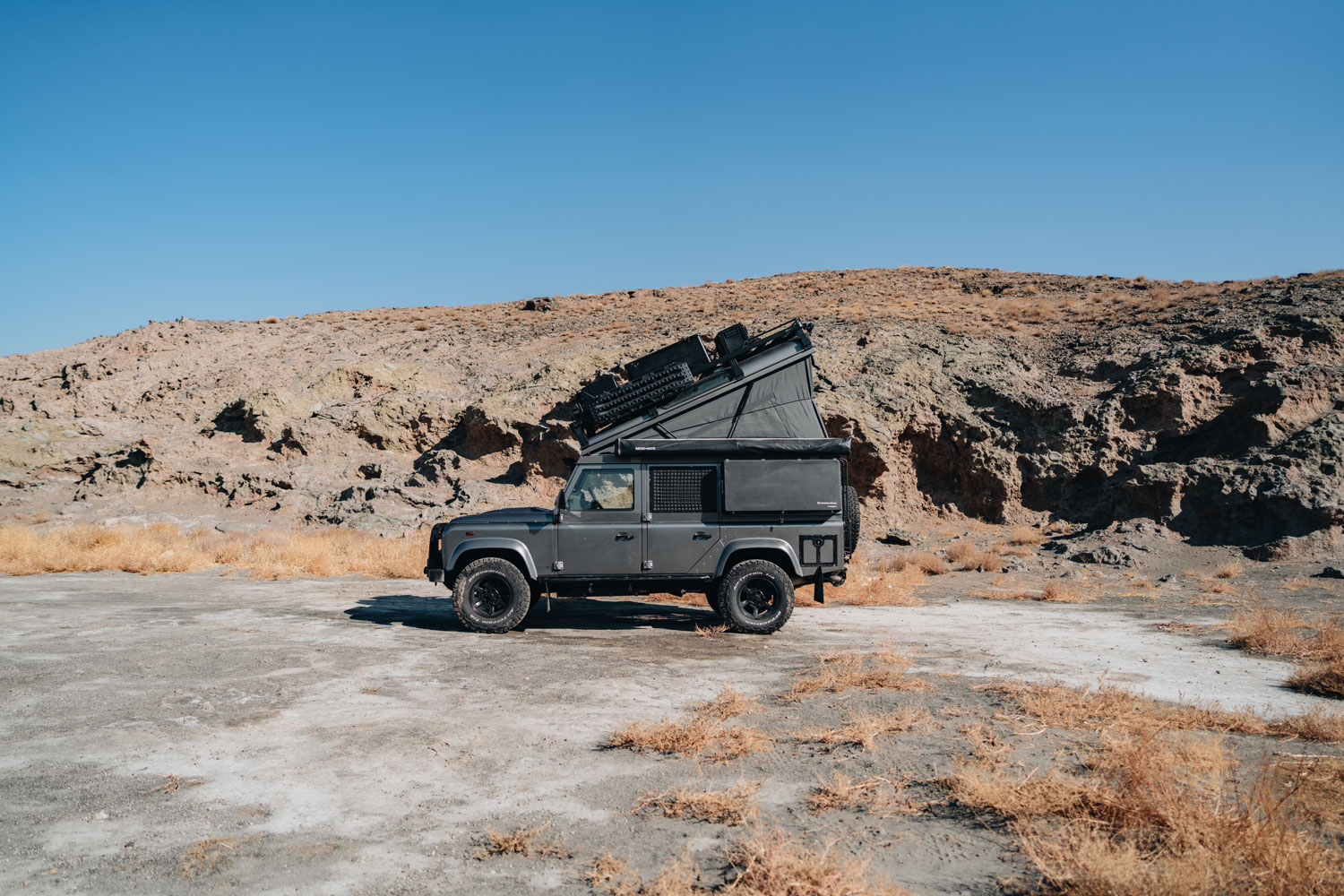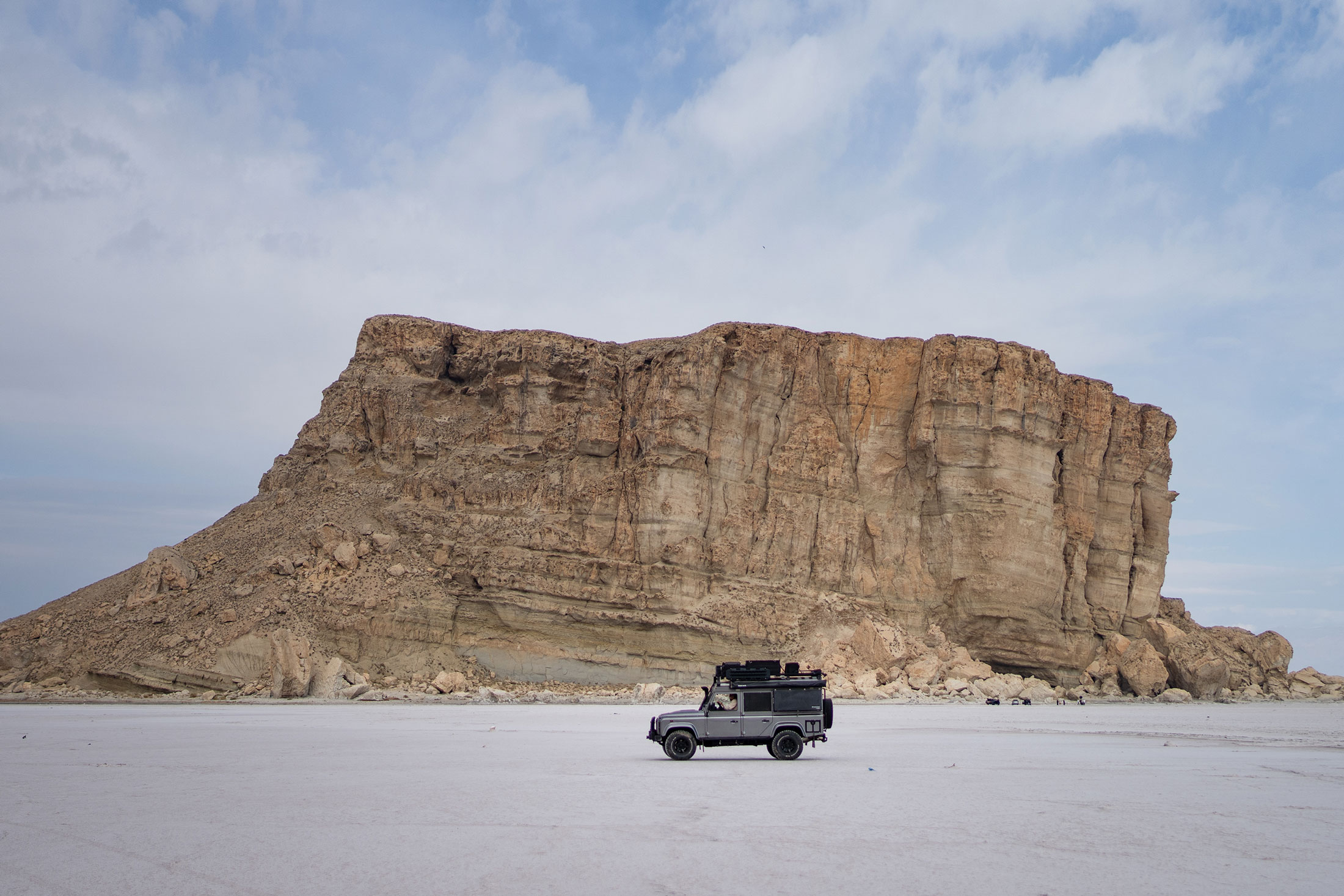

Once the largest salt lake in the Middle East
We hadn’t been in the country for long, but one thing was already clear: we loved it. The hospitality of the Iranian people was on another level, while the culture and landscapes felt truly unique. Wherever we stopped the car, people greeted us, invited us for tea and curiously asked where we had come from. From the city of Khoy, we continued towards Lake Urmia, a remarkable natural site recognised as both a UNESCO Biosphere Reserve and a Ramsar wetland.
Lake Urmia lies in northwestern Iran, between the provinces of East and West Azerbaijan. It was once the largest salt lake in the Middle East and one of the largest hypersaline lakes in the world. Surrounded by dry mountains and wide open plains.


Lake Urmia was once one of the world’s largest salt lakes, but today, much of it has dried into an endless white plain. Drought, dams and intensive agriculture have caused the lake to lose most of its water since the 1990s.

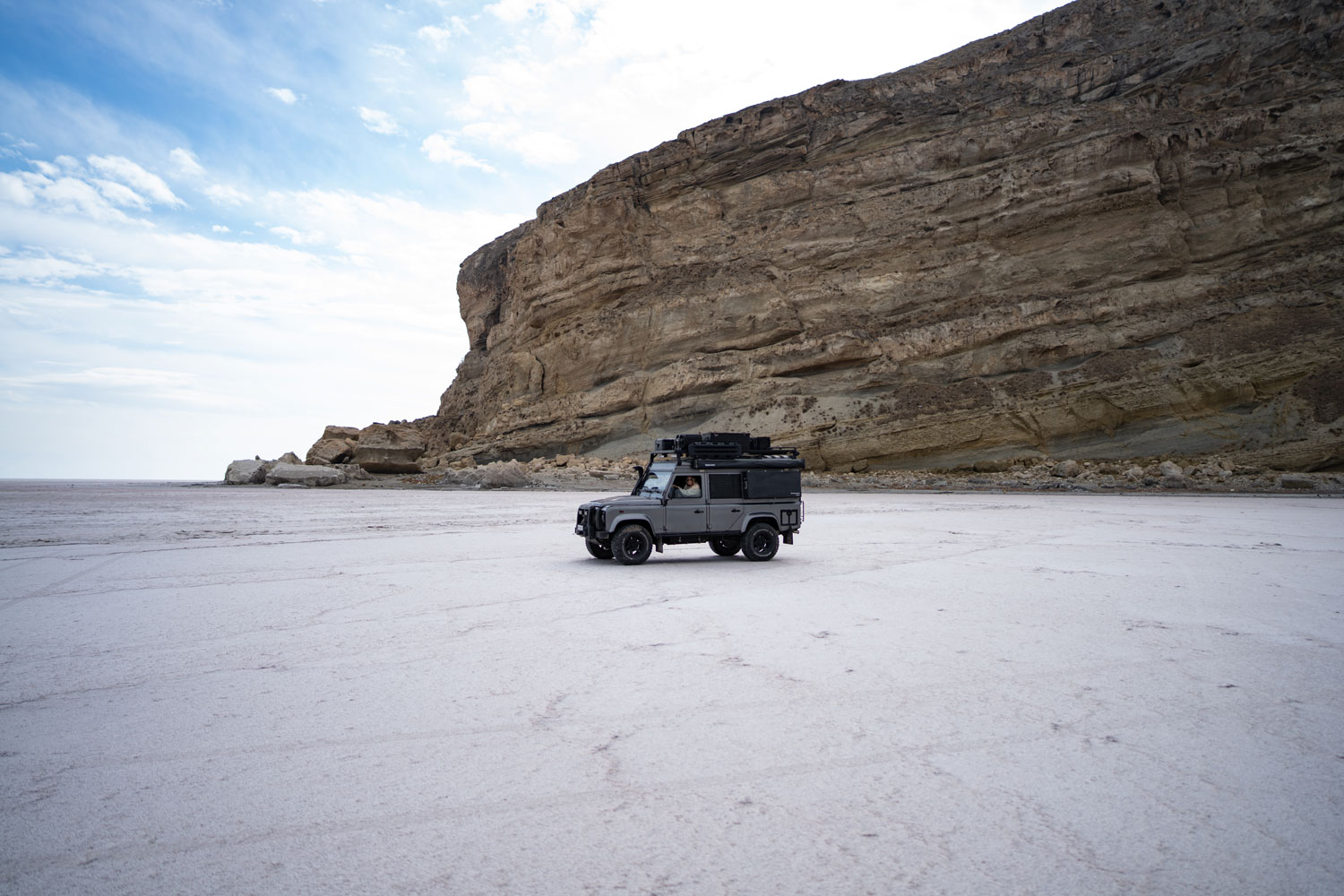
We drove our Defender far out onto the salt flats, with nothing but white ground around us. We kept looking for flamingos along the way, but there were none to be seen. We read that they were coming here often, when there is stil water. It was impressive to drive across, but also strange knowing that all of this used to be covered by water.

A LOT OF SALT


The holes appear where water under the crust dissolves the salt again.

The crystals formed as the remaining salty water slowly evaporated.
There was nothing around us but some rocks and white salt all the way to the horizon. No real track, no traffic, no sound except the Defender moving over the hard crust. Somehow empty with a stillness that's slightly unreal, but at the same time incredibly fun to drive.

We kept thinking: Is this really Iran? The landscape was so unexpected and incredibly fun to explore. But knowing that we were driving across the dried-out remains of a once-massive lake gave the whole experience a much heavier side.

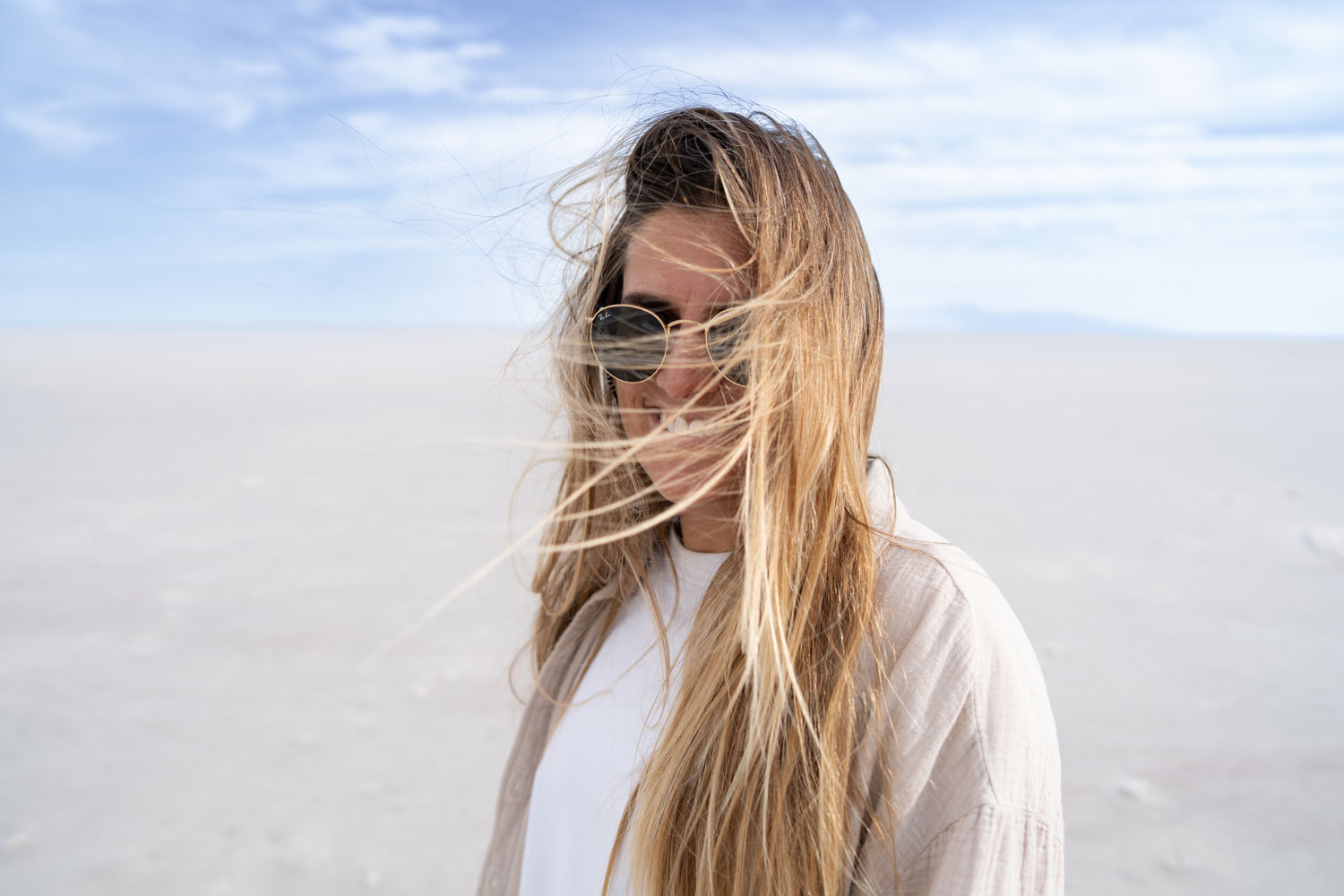


The Camp Site
We spent two nights camping around the lake. There was no water left and no flamingos either, but the place still felt wild and open. We barely saw anyone, apart from a group of locals doing a wedding photoshoot out on the salt flats. As soon as the sun went down, the temperature dropped fast, and the nights were much colder than we had expected this far east.